

Common Bugline Trail Injuries and How to Fix Them
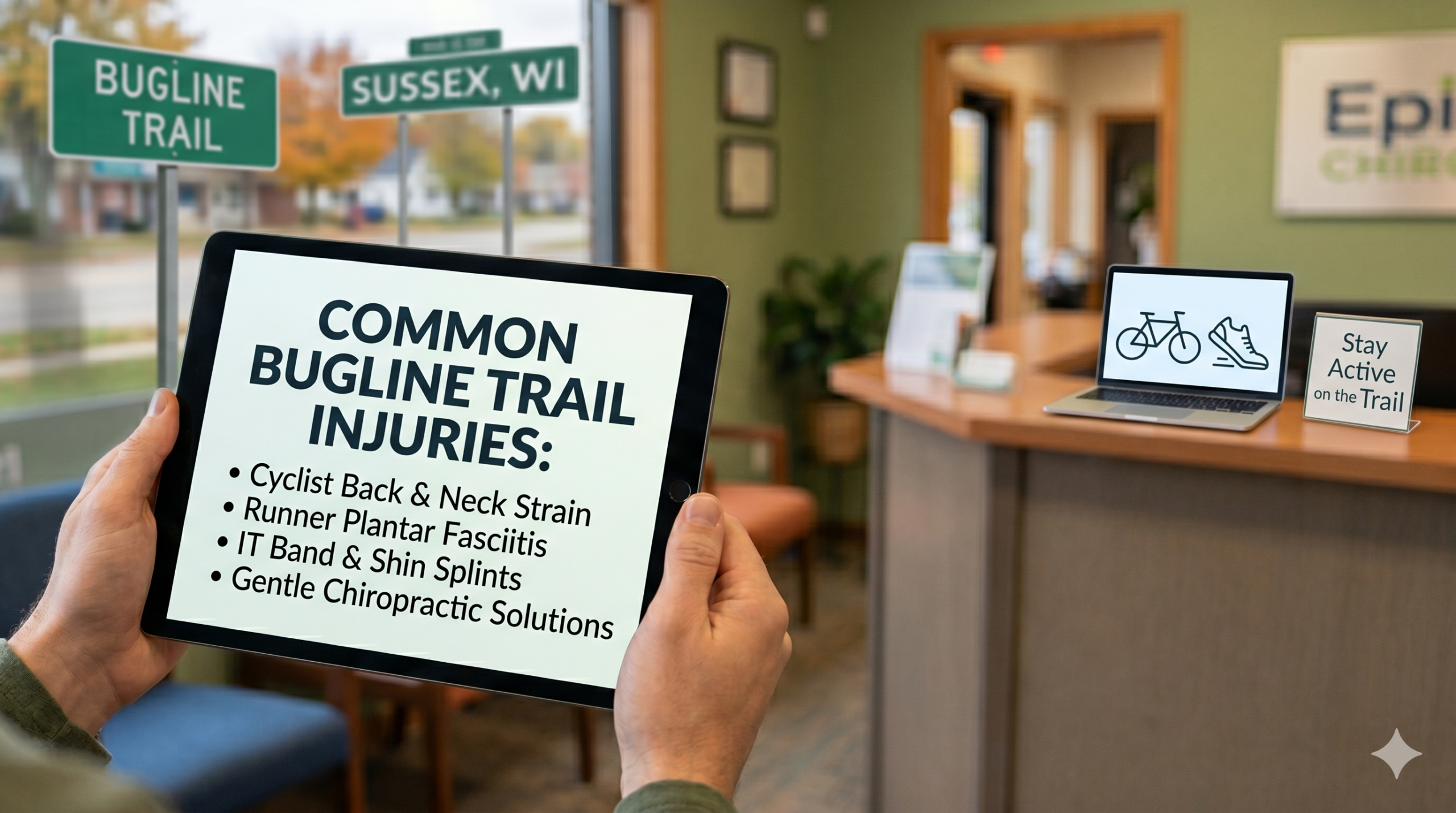
The Bugline Trail is one of the better outdoor assets we’ve got in this part of Waukesha County. It runs through Sussex on its way between Menomonee Falls and Merton, and on any decent weekend you’ll find it packed with cyclists, runners, walkers, and the occasional cross country skier when the snow shows up.
We see a steady stream of patients in our Sussex office who picked up nagging injuries on the trail. Most of them are either preventable or fixable with the right approach. Here’s a rundown of the most common ones, why they happen, and what actually helps.
For cyclists
Lower back tightness and pain. The aero position you sit in for hours on a road or gravel bike puts sustained load on the lumbar spine. The usual culprit isn’t actually the bike, it’s tight hip flexors paired with a weak posterior chain, sometimes with a saddle position that’s off by a centimeter or two. If your back is locked up after every ride, the fix is usually some mix of a bike fit check, hip mobility work, and dealing with any underlying spinal restrictions.
Neck and upper trap pain. Looking up while bent forward is unnatural for the cervical spine. Hold it for an hour or two and the suboccipital muscles and upper traps lock down. A lot of cyclists finish a Bugline ride with a headache that starts at the base of the skull. That’s a cervicogenic headache, and it usually responds well to targeted chiropractic work plus better posture off the bike.
Numbness in the hands. Usually ulnar nerve compression at the wrist. Sometimes it’s nerve irritation higher up in the neck or shoulder. If padded gloves and adjusting your hand position don’t fix it within a few rides, it’s worth getting checked.
For runners
Plantar fasciitis. That sharp heel pain when you take your first steps out of bed in the morning. Usually traces back to sudden mileage increases, worn out shoes, or tight calves. Chiropractic care isn’t a magic fix on its own, but addressing pelvic alignment and any gait imbalances often makes a real difference alongside calf stretching and decent footwear.
IT band syndrome. That lateral knee pain that shows up partway into a run, usually on longer outings. The IT band itself is almost never the real problem. It’s usually glute weakness or a hip imbalance, and the IT band is just where the symptom shows up. Strengthening the glute medius and dealing with any SI joint dysfunction tends to clear it.
Shin splints. Pain along the inner edge of the shin, common in newer runners or anyone who ramped up mileage too fast. Often related to overpronation, but biomechanical issues higher up the chain at the hip and pelvis frequently play a role too.
Low back pain after long runs. This usually means your core stabilizers are fatiguing before your legs do, so your spine ends up absorbing load it shouldn’t. We see it a lot in runners and other active patients who added mileage faster than their stability work kept up.
When to wait it out, when to get it checked
Mild soreness for a day or two after a hard effort is normal. Not something to worry about. The signs worth taking seriously:
- Pain that’s getting worse week to week instead of better
- Pain that changes how you move, like limping or favoring one side
- Pain that radiates down a leg or an arm, or comes with numbness or tingling
- Anything you’ve been “managing” with ibuprofen for more than a couple of weeks
Any of those usually mean there’s a mechanical issue that won’t resolve on its own.
How we look at this stuff
Dr. Jeff’s background is in exercise science and personal training before he became a chiropractor, so the conversation with active patients tends to be less “stop doing the thing” and more “let’s fix what’s actually wrong so you can keep doing the thing.”
Treatment usually starts with a MyoVision scan to figure out where the nervous system is under stress. From there it’s gentle adjustments with the Integrator instrument (no aggressive cracking or twisting) and specific corrective work you do at home between visits.
If you’re a Bugline regular dealing with something nagging, getting it looked at early usually means a faster return to your normal mileage. Book a new patient visit or call us at 414-426-9677.

Dr Jeff Grosskopf founded Epic Life Chiropractic in Wauwatosa, Wisconsin. He earned a BS in Exercise Science from Trinity Christian College and his DC from Life Chiropractic College. With over 17 years of experience, he uses advanced imaging, MyoVision scanning, and the Torque Release Technique to correct spinal ligament injuries and vertebral subluxations. He works alongside personal injury attorneys across Wisconsin to provide expert evaluations and precise treatment plans. Dr Jeff lives in Sussex with his wife Amy and their children Bradlee and William. He stays active through running, strength training, and baseball, and volunteers at his church in Menomonee Falls.